Home About Us What We Do Publications Contact Us  


Urgent International Pressure Needed to Ensure Equitable Registration Process

(1 December 2010) Registration for Southern Sudanese voting in the long-awaited referendum on self determination began on 15 November. Scheduled to conclude on 1 December, registration was extended to the 8. Despite wide registrant turnout in the South, many of the elements that undermined the campaigning period and national elections in April 2010 are already present. This is particularly troubling given the short time between registration and voting for the referendum. Some of the areas of concern are:

Procedural Irregularities and Delays: Despite technical and logistical difficulties, thousands of people lined up for hours to register on the first day. High demand in urban areas of South Sudan has rapidly depleted supplies such as voter ID cards and indelible ink, and other centres have yet to receive crucial materials such as registration journals and have been forced to make ad hoc replacements.  South Sudan Referendum Commission (SSRC) staff present in centres are responsible for ascertaining an individual’s identity, manually recording their details, issuing voter ID cards with a serialised number unique to the location they are registered in, and preparing the preliminary register for exhibition. The Carter Center monitoring mission reported that in some locations, many Sudanese without identity documents were left without recourse due to a lack of “identifiers”, individuals empowered to affirm identities. Rejected registrants were observed simply walking out of registration centres without being told of their right to challenge the decision to the Consideration Committee (an administrative body tasked with hearing objections to the register) and without written notice in violation of established procedures. In some locations, it is unclear whether the Consideration Committees, a vital part of the appeals and exhibition process scheduled to begin a week after registration, have formed. In many cases, procedural irregularities have been politicised by the NCP and SPLM in deliberate attempts to undermine the registration’s credibility, or to intimidate individuals.

  • On 20 November, police in Khartoum charged Moses Kier Shoul, a member of the SSRC in Al Saha Al Shabhia registration centre of assault under Article 142 of the Sudanese Criminal Code of 1991. SSRC staff in the centre got in a physical altercation when Mr. Shuol opposed the registration of an individual over lack of proper ID.
  • There have been allegations of children being registered by the NCP in Althawra East, Khartoum.
  • On 21 November, the NCP submitted a complaint to the SSRC alleging irregularities including refusal to register individuals with mixed parentage, early closure of registration centres, various delays, and presence of SSRC officials under the mandated age of 40.
  • On 24 November, three new registration centres were opened in Al Radom, Abu Kanarka, and Abu Jabra, South Darfur. A registration centre was opened in Bileil on 21 November. Two registration centres were moved: Tulus to Katila, and Abu Jarda to Al Fardus. On 17 November, 9 out of 11 registration centres were open.

Initially, UNDP had requested quotes from printing houses by 30 November, with the deadline for distributing ballots by 15 December. Under tremendous pressure from Khartoum, the deadline for proposals was extended to 5 December with an unknown date for the delivery of ballots. It remains unclear which firm will have the responsibility for printing and delivering ballots, but some have expressed fear that a nationally-owned firm could present a low bid and manipulate the vote by printing a surplus of ballots without individualised serial numbers.

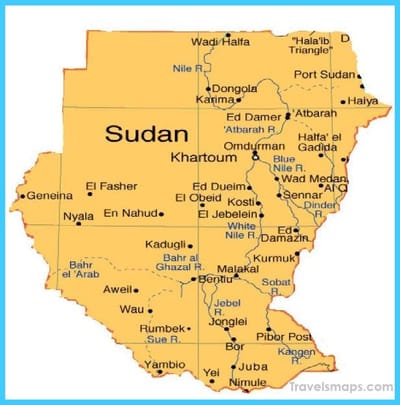
Lack of Access for Registrants in the North and South: Whereas registrant turnout in the South has been extremely high, turnout in the North has been relatively low. In Khartoum, only 33 southerners registered the first day, despite there being 23 registration centres in Khartoum, 31 in Omdurman, and 18 in Khartoum North. There have been conflicting reports as to whether southerners are resisting registering due to intimidation and fears they will be forced to vote for unity, or whether there has been an SPLM directive to not register outside of the south. The Government of South Sudan (GoSS) has taken measures to promote return ahead of the referendum, and Unity State has established an office in Khartoum’s Sahafa suburb to provide transport.  Low registration may also be due to lack of information about the referendum registration process from the Government of Sudan, the GoSS, and the SSRC. The registration process is taking place in a highly repressive environment with little space for the freedom of expression inhibiting civil society and media voter education.

Many registration centres in the North are located in peripheral areas, making them difficult to access for southerners. The Referendum Act stated that centres shall be established in areas where there are at least 20,000 voters, although population figures have been hotly contested. Red Sea has three registration centres to cover the entire state. In Jabait Senkat and Haia only 28 people registered the first day; notably, they were brought to the centre on a bus by the NCP. Though the centres are supposed to cover Swaken, Durdaib, and Tukar, Durdaib is approximately four hours away. In Port Sudan, averages of 5 – 10 people have registered per day. Most of the registrants were southern members of the Marine Forces Command originally from Abyei, and plan to return home after the referendum. A southern community leader in South Darfur, Garang Kuol, stated on 19 November that over 10,000 people in the areas surrounding Alfrdous and Alsalaia still lacked access to a registration centre.

Registration for Southern Sudanese is concurrently taking place in abroad in eight countries (the US, UK, Egypt, Kenya, Uganda, Ethiopia, Australia, and Canada), facilitated by the International Organisation for Migration. Although this is a positive step, it is of concern that the registration process was delayed in the US and UK, and at the time of writing has not yet begun in Egypt. In addition, Southern Sudanese in Uganda have received death threats warning them not to register, allegedly by other southern Sudanese who fear that out-of-country registration will be more susceptible to rigging.

Intimidation and Harassment of Potential Registrants and Campaigners: Perhaps the single most troubling aspect of the referendum is the context in which it is taking place. Inflammatory rhetoric has been exchanged by the NCP and SPLM, and skirmishes have taken place. Southerners’ uncertainty and fears over what their futures will be following the referendum – whether they will retain their citizenship, property, and jobs – and the potential for violent reprisals against southerners in the North in the event of secession are very real. For the referendum process to be perceived as fair and free, registrants and campaigners should be entitled to exercise their right to freedom of expression and participation.

  • Nuer students in Khartoum who organised public talks on the outcomes of the October South-South conference were stopped on two occasions by police, and a symposium in Gedarif state intended to address the economic implications of Southern secession was blocked by the National Intelligence and Security Services. An organiser of an October pro-secession rally in Khartoum was arrested and tortured by National Intelligence and Security Services, and sentenced to 15 days in prison after he was convicted of “disturbance of public peace”.
  • On 15 November, six officials at the local SSRC office, in addition to two chiefs of Makundi Payam Ward in Wulu County, Lakes State, were arrested over a border dispute between Western Equatoria and Lakes State. The CPA stipulated that Makundi be shared by the two states, but Makundi’s registration centre was apparently attempting to register residents of Lakes State in a centre actually in Western Equatoria. Due to the arrests, the first day of registration was lost and two out of three centres were forced to close.
  • On 20 November, an NCP member supervising the NCP campaign in Upper Nile State, Zuhair Hamed Suleiman, was arrested at Juba airport by the SPLM while trying to board a flight to Bor. He was held for two days and beaten.

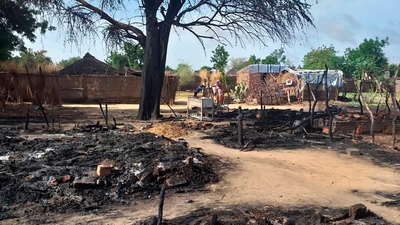
A broader campaign of harassment and intimidation of Southerners in the North began ahead of registration. Raids in Dar el Salaam and Wad Al Bashir IDP camps, allegedly on the pretext of searching for unlicensed weapons and illegal alcohol, have increased. The raids target southern IDPs, and homes are frequently ransacked. On 10 October, police demolished eight homes belonging to Southern IDPs in Al Mamora area, Khartoum. A church believed to be a weapons arsenal in Amarat Khartoum was raided by 200 police on 14 November. Though no weapons were found, the doors and windows to the church were all destroyed.

Various parties have also launched a campaign to control registration by targeting populations deemed likely to vote for unity or secession. Days before registration began, over 200 people were displaced from Joda, Southern White Nile State, by the SPLM. The displaced community is Nizi, a semi-nomadic Arab tribe. On 12 November, a convoy of 140 vehicles of southern IDPs travelling from Khartoum to Heljaj and Alkharasanh near Unity State were stopped by armed Misseriya gunmen. They were held for a day and a half before being released and allowed to move forward following high level mediation.

The registration and referendum mark one of the few times that Sudanese are able to actively participate in shaping institutions and governance, despite this being one of the goals of the interim period. While registrants will vote based on a “yes or no choice”, the two partners to the CPA will have
the challenging task of moulding the shape of unity or secession. Emphasis should be placed on ensuring that democratic transformation, peace and human rights protections are inserted into the post-referendum transition, whatever the outcome may be.

With little over a month left until an event that will transform Sudanese history, the international community must take urgent measures to bolster the accountability and transparency of the referendum process to ensure that the parties do not return to war. Though the extension of the registration period in order to account for depleted materials due to high voter turnout in the South and to allow for higher registration of southerners in the North is positive, it fails to address key political concerns. Southerners living in the north have stated that they will “go home to vote or not at all”, but no arrangements have been made for their livelihoods in the north or south. Plurality of voices concerning the future of Sudan – whether one state or two – has not been allowed by the NCP and SPLM. There will be only one referendum. To ensure public confidence in the legitimacy of the referendum and its outcome, the guarantors of the CPA, the UN, the AU, and monitoring institutions must carefully safeguard the critical period ahead.


Sudan Referendum Act and Voter Registration Rules and Regulations

“Carter Center Statement on Sudan Referendum: Strong Start to Registration But Urgent Action Needed to Ensure Broad Participation”, Carter Center, 24 November 2010.

Race Against Time: the countdown to the referenda in Southern Sudan and Abyei. Rift Valley Institute, Aly Verjee, October 2010.


Copyright 2011